


We Got Our Hands on an HK G11, the Space-Age Rifle That Never Was
We took apart the HK G11 to figure out what makes this Cold War weapon one of the weirdest rifles ever made.
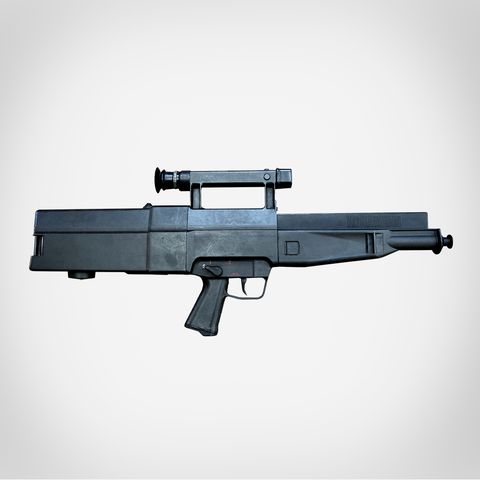
The Cold War gave rise to a host of exotic weapons never fired, but none were quite as strange–and potentially revolutionary—as Heckler & Koch's G11.
Affectionately referred to as "Kraut Space Magic" in reference to its over-engineered-yet-brilliant West German design, the G11 does look like it belongs in the hands of some space trooper rather than a typical infantryman. But the true "magic" of the G11 is much more than meets the eye, because inside that boxy frame was a gun unlike any ever made
By encasing its ammunition in a chemical propellant rather than a typical brass casing, the G11 was more accurate, efficient, and potentially deadly than any rifle of its time. But even after millions of dollars in R&D spent, the gun never saw combat, and after the collapse of the Soviet Union it mostly passed into obscurity.
The best way to learn about what happened to the G11 and it why was so forward-thinking is to take one apart. There are less than 20 or so G11s left in the world, but we got our hands on one to figure out what makes it tick—and why it was eventually consigned to the scrap heap of history.
What Sets the G11 Apart?

A typical firearm uses brass cases to hold the propellent, which are then topped by the bullet. While a dependable design, and one still in use today, this brass case adds weight to an already overburdened soldier
But the late 1960s, German designers from Heckler & Koch tried another approach. Producing a working prototype in 1974, the G11 was Germany’s attempt to combine advanced caseless ammunition with a brilliantly engineered weapon system that could increase the average infantryman’s accuracy. West Germany would test the weapons system, as would the U.S. Army in the 1980s. In another timeline, the G11 could have been the next-generation replacement for the M16.

The G11 abandoned the traditional casing idea and fired a 4.73x33mm caseless round, developed by Dynamit-Nobel. This new kind of ammo used propellant chemicals which formed a solid block surrounding the bullet. This design greatly lightened ammunition (a problem gun makers are still trying to tackle 40 years later) and increased the rate-of-fire since no casings needed to be ejected. Combining the one-of-a-kind ammo with a gas-operated rotating breech action controlled by a recoil buffer system, the G11 could also fire in single shot, go fully automatic, or shoot in a hyperburst mode
But the late 1960s, German designers from Heckler & Koch tried another approach. Producing a working prototype in 1974, the G11 was Germany’s attempt to combine advanced caseless ammunition with a brilliantly engineered weapon system that could increase the average infantryman’s accuracy. West Germany would test the weapons system, as would the U.S. Army in the 1980s. In another timeline, the G11 could have been the next-generation replacement for the M16.
The G11 abandoned the traditional casing idea and fired a 4.73x33mm caseless round, developed by Dynamit-Nobel. This new kind of ammo used propellant chemicals which formed a solid block surrounding the bullet. This design greatly lightened ammunition (a problem gun makers are still trying to tackle 40 years later) and increased the rate-of-fire since no casings needed to be ejected. Combining the one-of-a-kind ammo with a gas-operated rotating breech action controlled by a recoil buffer system, the G11 could also fire in single shot, go fully automatic, or shoot in a hyperburst mode.
This last function describes the G11’s ability to fire three rounds at the astonishing rate of 2,000 rounds a minute–that’s around 33 rounds per second. The rifle’s caseless ammunition and rotating breech is what achieve these blistering rates of fire. By comparison the M16A1, the U.S. Army’s standard rifle at the time, fired around 800 rounds per minute while the ComBloc AKM cycled at a leisurely 600 rounds per minute.
With hyperburst, the G11’s recoil buffer prevented a strong recoil impulse from the three rounds, greatly improving accuracy over normal full-auto fire. The buffer essentially stored the recoil until after the third bullet left the barrel. The recoil was also controlled by a special spring buffer system that allowed the barrel and action of the gun to recoil backwards up to 4 inches inside its stock before the operator felt the recoil.
No comments:
Post a Comment